.png)
The Complete Guide to Resin Bound Driveways: Benefits, Costs & Installation
Local Context
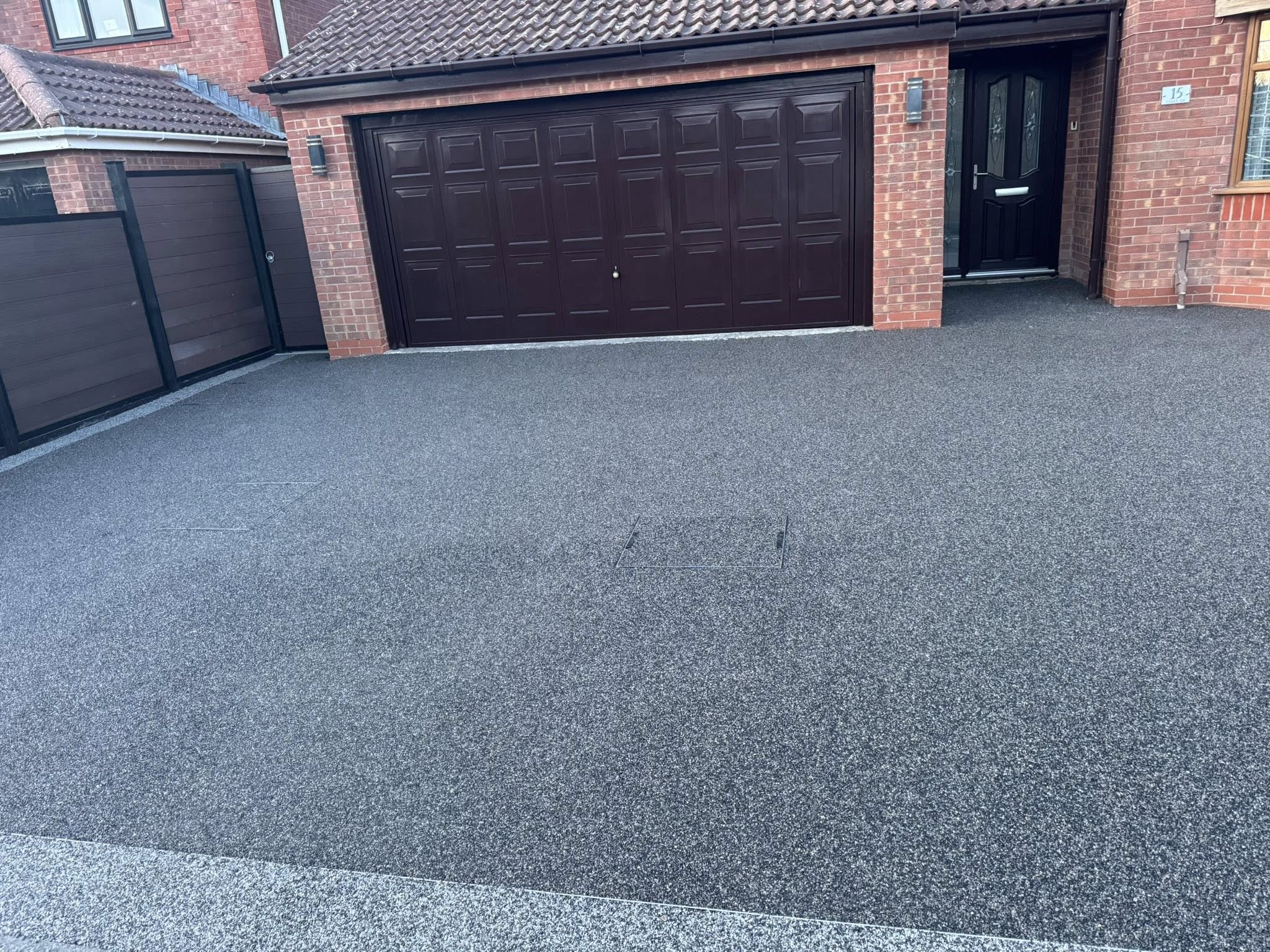
This comprehensive educational guide focuses on resin bound driveway installations across Poulton-le-Fylde, Blackpool, and the wider Fylde Coast region. Resin bound surfacing has become increasingly popular in the area due to its excellent drainage performance in high-rainfall coastal climates, contemporary aesthetic appeal, and SUDS compliance for planning regulations. The featured case study showcases a professional Poulton-le-Fylde installation demonstrating how resin bound surfacing transforms residential properties while providing environmental benefits and long-term value. This guide serves as the definitive resource for Fylde Coast homeowners considering premium permeable paving solutions.
# The Complete Guide to Resin Bound Driveways: Benefits, Costs & Installation Resin bound driveways have rapidly become one of the most sought-after surfacing solutions for UK homeowners, and for excellent reasons.
This comprehensive guide covers everything you need to know about resin bound surfacing—from the technical specifications and installation process to design possibilities, cost analysis, and real-world performance.
Whether you're considering resin bound for your Poulton-le-Fylde property or anywhere across the Fylde Coast, this guide will help you make an informed decision about this premium paving option. ## What is a Resin Bound Driveway?
Resin bound surfacing is a modern paving technique that combines natural aggregates (decorative stones and gravels) with a clear UV-stable polyurethane resin binder.
Unlike traditional loose gravel or other surfacing methods, the aggregate is thoroughly mixed with resin before being applied to a prepared base, creating a **seamless, permeable, and durable surface** with a smooth, attractive finish. ### How Resin Bound Works: The Technical Fundamentals The resin bound system consists of several key components working together: **1.
The Resin Binder**: A two-component polyurethane resin system that provides: - UV stability to prevent yellowing or degradation in sunlight - Flexibility to accommodate minor substrate movement - Strong adhesive properties for long-lasting aggregate retention - Resistance to oil, fuel, and chemical spills - Excellent weathering performance in all UK climates **2.
The Aggregate Blend**: Carefully selected natural or recycled stones typically ranging from 1-8mm: - Rounded or angular profiles depending on desired texture - Sourced from UK quarries or sustainably imported materials - Available in wide color palette from whites and creams to greys, browns, and mixed blends - Graded to precise specifications for optimal permeability - Blended in specific ratios to achieve desired appearance **3.
The Permeable Base**: A properly constructed sub-base ensures longevity and drainage: - Type 1 MOT sub-base compacted to appropriate depth (typically 100-150mm) - Optional permeable tarmac or concrete base layer - Geotextile membrane to prevent sub-base migration - Falls and drainage designed for water management - Edge restraints to contain the resin bound surface ### Resin Bound vs Resin Bonded: Critical Differences Many homeowners confuse these two distinct systems.
Understanding the difference is essential: **Resin Bound (Recommended)**: - Aggregate and resin mixed together before application - Smooth, flat surface - Fully permeable (SUDS compliant) - No loose stones - UV stable with long color retention - Premium appearance and performance - Higher initial cost but superior long-term value **Resin Bonded**: - Resin applied to surface, then loose aggregate scattered on top - Textured surface with loose stones - Not permeable - Stones can become loose over time - More affordable initially - Suitable for specific applications like pathways - Not recommended for driveways **For driveways, resin bound is almost always the superior choice** due to its durability, permeability, and aesthetic quality.  ## Case Study: Poulton-le-Fylde Resin Bound Installation Our featured project in Poulton-le-Fylde perfectly demonstrates the transformative impact of professional resin bound surfacing.
This installation showcases the key benefits that make resin bound an excellent choice for Fylde Coast properties. ### Project Overview **Location**: Residential property in Poulton-le-Fylde **Surface Area**: Approximately 60 square meters **Aggregate Selection**: Natural golden gravel blend with subtle tonal variation **Installation Duration**: 7 days including base preparation **Base Construction**: 150mm Type 1 MOT sub-base with permeable tarmac overlay **Finish**: Smooth, seamless resin bound surface with excellent permeability ### Project Objectives The homeowners sought to replace an aging block paving driveway that had become uneven and weed-infested.
Their priorities included: 1. **Modern Aesthetic**: Contemporary, seamless appearance to enhance curb appeal 2. **Low Maintenance**: Elimination of weeds and minimal ongoing care requirements 3. **Permeability**: SUDS compliance to avoid planning permission complications 4. **Durability**: Long-lasting surface resistant to coastal weather conditions 5. **Value Enhancement**: Premium finish to increase property value ### Installation Process **Day 1-2: Excavation and Base Preparation** - Removal of existing block paving and sub-base materials - Excavation to appropriate depth accounting for new base and surface - Installation of edge restraints and drainage channels - Geotextile membrane placement **Day 3-4: Sub-base Construction** - 150mm Type 1 MOT installation and compaction in layers - Laser-grading to ensure correct falls and drainage - Edge detail completion - Quality inspection before next phase **Day 5: Base Layer Application** - Permeable tarmac overlay (optional but recommended for domestic driveways) - Further falls and level verification - Curing period to ensure base stability **Day 6: Resin Bound Application** - On-site mixing of aggregate and resin in forced-action mixer - Professional application by experienced team - Edge work and detail finishing - Surface inspection and quality control **Day 7: Final Curing and Handover** - Final curing period with traffic restriction - Clean-up and site restoration - Maintenance guidance provided to homeowners - Project completion and handover ### Results and Performance The completed installation exceeded the homeowners' expectations in multiple ways: **Immediate Visual Impact**: The seamless, contemporary appearance dramatically improved the property's street presence.
The warm, natural aggregate color complements the property's brickwork while providing a modern contrast to neighboring properties. **Drainage Performance**: During the first winter, the permeable surface demonstrated excellent water management, with no puddles or standing water even during heavy Fylde Coast rainfall.
Water drains through the surface within seconds, eliminating the icy patches that plagued the previous block paving. **Maintenance Reality**: After 18 months, the surface remains virtually maintenance-free.
A quarterly pressure wash keeps it looking pristine, with no weed growth, no sinking or subsidence, and no repairs required.
The homeowners report spending minimal time on driveway maintenance compared to their previous surface. **Weather Resistance**: Exposure to coastal weather, including salt air, heavy rain, frost, and UV radiation, has had no visible effect on the surface.
Color remains consistent, with no fading or yellowing.
The flexible resin system accommodates temperature changes without cracking. **Property Value Impact**: The professional finish and contemporary aesthetic contributed to the property's market appeal, with estate agents noting the driveway as a positive feature during valuation. ### Homeowner Feedback *"We couldn't be happier with our resin bound driveway.
It's transformed the front of our house and requires virtually no maintenance.
During heavy rain, we love watching the water just disappear through the surface—no more puddles!
It still looks as good as the day it was installed, and we've had so many compliments from neighbors and visitors."* ## Comprehensive Design Benefits and Aesthetic Appeal Resin bound driveways offer unmatched design flexibility and aesthetic advantages that elevate property presentation. ### Design Versatility **Seamless Contemporary Finish**: The smooth, joint-free surface creates a clean, modern aesthetic that complements contemporary architecture and landscaping.
The absence of joints and gaps delivers a unified appearance impossible to achieve with modular paving products. **Unlimited Color Options**: With over 50 standard aggregate colors and the ability to create custom blends, resin bound offers: - Natural stone tones: golden gravels, warm browns, soft creams - Contemporary shades: silver greys, charcoal, slate tones - Traditional colors: red granite, buff quartz, sandstone hues - Bold options: contrasting borders, feature panels, decorative patterns - Mixed blends: combining multiple colors for depth and visual interest **Pattern and Design Flexibility**: While the surface itself is seamless, design possibilities include: - Contrasting borders in different aggregate colors - Curved edges and organic shapes - Feature panels and decorative insets - Company logos or house numbers embedded in surface - Transitional zones between different aggregate blends - Integration with other materials like natural stone or block edging ### Aesthetic Advantages Over Alternative Surfaces **Superior to Traditional Gravel**: - No loose stones tracking into house or onto lawns - Clean, defined edges without gravel migration - Smooth surface comfortable for walking, even in bare feet - No ruts or displacement from vehicle wheels - Professional, upscale appearance **More Contemporary Than Block Paving**: - Seamless surface without repetitive joint lines - No subsidence or individual block movement - Modern aesthetic aligned with current design trends - Color remains integrated rather than surface-applied - No weed growth through joints **More Interesting Than Tarmac**: - Natural stone aesthetic rather than black bitumen - Texture and color variation adds visual interest - Reflects light differently, reducing heat absorption - Permeable rather than impermeable - Premium appearance commanding higher property values **More Practical Than Pattern Imprinted Concrete**: - Permeable surface for better drainage - Flexible system accommodates substrate movement - Easier to repair if damage occurs - More slip-resistant in wet conditions - Softer appearance with natural materials ### Texture and Surface Feel Resin bound surfaces offer unique tactile qualities: **Smooth Yet Textured**: The surface is smooth enough for comfortable walking and wheeled luggage, yet textured enough for excellent slip resistance—even when wet.
This balance makes it ideal for all ages and mobility levels. **Natural Stone Authenticity**: The exposed natural aggregate provides authentic stone appearance and feel, unlike painted or printed surfaces.
Running your hand over the surface reveals the genuine texture of real stone. **Temperature Moderation**: Natural stone aggregates don't retain heat like dark tarmac surfaces, remaining more comfortable underfoot during summer weather.
Light-colored aggregates reflect rather than absorb solar radiation. ### Integration with Property Features Resin bound surfacing integrates beautifully with: **Traditional Architecture**: Natural aggregate colors complement brick, stone, and rendered properties, bridging traditional construction with modern surfacing technology. **Contemporary Design**: The seamless finish aligns perfectly with minimalist, contemporary design principles popular in modern properties. **Landscaping Elements**: Resin bound surfaces provide an elegant transition between hard landscaping and soft planting areas.
The natural stone aesthetic connects visually with garden features. **Property Boundaries**: Flush edges allow seamless integration with walls, fences, and property lines without awkward gaps or transitions. **Existing Features**: The flexible application allows for neat detailing around existing features like manhole covers, drainage grates, and utility access points. ## Comprehensive Comparison: Resin Bound vs Alternative Driveway Options Choosing the right driveway surface requires understanding how resin bound compares to alternatives across multiple factors. ### Resin Bound vs Traditional Tarmac **Appearance and Aesthetics** - **Resin Bound**: Natural stone aesthetic with color variety and visual interest.
Premium, contemporary appearance that enhances property value. - **Tarmac**: Plain black or red surface with uniform appearance.
Functional but visually basic, often perceived as low-budget option. - **Winner**: Resin Bound (significantly superior aesthetics) **Permeability and Drainage** - **Resin Bound**: Fully permeable, SUDS compliant.
Water drains through surface within seconds, eliminating standing water and ice formation. - **Tarmac**: Impermeable surface requiring drainage channels and falls.
Water runs off surface, potentially causing local flooding issues. - **Winner**: Resin Bound (environmental and practical advantages) **Durability and Longevity** - **Resin Bound**: 20-25 year lifespan with minimal maintenance.
UV stable, flexible, and resistant to cracking. - **Tarmac**: 10-15 year lifespan before significant deterioration.
Prone to cracking, surface breakdown, and pothole formation. - **Winner**: Resin Bound (superior longevity) **Maintenance Requirements** - **Resin Bound**: Minimal maintenance—occasional pressure washing.
No weeds, no repairs needed for decades. - **Tarmac**: Regular surface treatments, crack filling, and eventual resurfacing required.
Weeds can grow in cracks. - **Winner**: Resin Bound (significantly lower maintenance) **Installation Cost** - **Resin Bound**: £85-110 per m² including proper base construction - **Tarmac**: £45-65 per m² including base - **Winner**: Tarmac (lower upfront cost) **Long-term Value** - **Resin Bound**: Higher upfront cost but superior durability and aesthetics provide better ROI.
Adds more to property value. - **Tarmac**: Lower initial investment but shorter lifespan and basic appearance limit value addition. - **Winner**: Resin Bound (better long-term value proposition) **Environmental Impact** - **Resin Bound**: Permeable surface reduces flood risk, filters pollutants, and supports sustainable drainage.
Can use recycled aggregates. - **Tarmac**: Impermeable surface contributes to urban flooding.
Bitumen products derived from fossil fuels. - **Winner**: Resin Bound (significantly more environmentally responsible) ### Resin Bound vs Block Paving **Appearance and Aesthetics** - **Resin Bound**: Seamless, contemporary finish.
Smooth surface with natural stone beauty.
No joint lines interrupting design. - **Block Paving**: Traditional appearance with repetitive joint pattern.
Modular nature limits design freedom.
Classic but dated in many contexts. - **Winner**: Resin Bound (more contemporary and seamless) **Maintenance Requirements** - **Resin Bound**: Minimal care needed.
Pressure wash occasionally.
No weed growth, no subsidence, no individual element movement. - **Block Paving**: Regular weed removal from joints essential.
Individual blocks sink and shift requiring re-leveling.
Joint sand needs replenishment. - **Winner**: Resin Bound (dramatically lower maintenance burden) **Durability and Performance** - **Resin Bound**: Monolithic surface distributes loads evenly.
No individual elements to sink or break.
Excellent vehicle load distribution. - **Block Paving**: Individual blocks can crack, sink, or shift over time.
Edge blocks particularly vulnerable.
Subsidence common without proper edge restraint. - **Winner**: Resin Bound (superior structural performance) **Permeability** - **Resin Bound**: Fully permeable throughout entire surface area.
Excellent drainage performance in all conditions. - **Block Paving**: Can be permeable if special blocks with wide joints used, but standard block paving is essentially impermeable.
Water drains through joints only. - **Winner**: Resin Bound (true permeability across entire surface) **Installation Time** - **Resin Bound**: 5-7 days typical including base preparation.
Weather dependent—requires dry conditions. - **Block Paving**: 7-10 days for average driveway.
More labor-intensive.
Less weather dependent. - **Winner**: Resin Bound (faster installation with proper conditions) **Repair and Alterations** - **Resin Bound**: Repairs possible but require matching aggregate and careful blending.
Alterations more complex. - **Block Paving**: Individual blocks easily replaced.
Alterations straightforward—lift and re-lay blocks as needed. - **Winner**: Block Paving (easier repairs and alterations) **Cost Comparison** - **Resin Bound**: £85-110 per m² - **Block Paving**: £70-95 per m² (quality concrete blocks); £90-120 per m² (natural stone pavers) - **Winner**: Variable depending on block quality chosen **Long-term Value Analysis** - **Resin Bound**: Higher upfront cost offset by minimal maintenance expenses and no replacement costs for 20+ years.
Superior aesthetic longevity. - **Block Paving**: Moderate upfront cost but ongoing maintenance expenses (re-sanding, weed removal, re-leveling) accumulate.
May require partial replacement within 15-20 years. - **Winner**: Resin Bound (better total cost of ownership) ### Resin Bound vs Pattern Imprinted Concrete **Aesthetic Characteristics** - **Resin Bound**: Natural stone texture using genuine aggregates.
Authentic material appearance with depth and variation.
Contemporary seamless finish. - **Pattern Imprinted Concrete**: Printed pattern mimicking stone or brick.
Surface-applied color that can appear artificial.
Wide design pattern options. - **Winner**: Tie (different aesthetic approaches—personal preference determines winner) **Permeability and Drainage** - **Resin Bound**: Fully permeable across entire surface.
True SUDS compliance with excellent water management. - **Pattern Imprinted Concrete**: Standard version is impermeable.
Permeable versions available but more expensive and less common. - **Winner**: Resin Bound (superior drainage unless permeable concrete specified) **Durability and Weather Resistance** - **Resin Bound**: Flexible system accommodates substrate movement.
Excellent freeze-thaw resistance.
No cracking from temperature changes. - **Pattern Imprinted Concrete**: Rigid surface prone to cracking, especially if base preparation inadequate.
Requires control joints.
Freeze-thaw damage possible. - **Winner**: Resin Bound (more flexible and crack-resistant) **Color Retention** - **Resin Bound**: Natural stone color integrated throughout material.
Excellent UV stability.
Color remains consistent for decades. - **Pattern Imprinted Concrete**: Surface-applied color hardener can fade over time.
Requires periodic resealing for color enhancement.
More vulnerable to UV degradation. - **Winner**: Resin Bound (superior long-term color retention) **Slip Resistance** - **Resin Bound**: Excellent slip resistance in all conditions due to natural aggregate texture.
Maintains grip when wet. - **Pattern Imprinted Concrete**: Can be slippery when wet, especially with high-gloss sealants.
Anti-slip additives help but reduce aesthetic appeal. - **Winner**: Resin Bound (better inherent slip resistance) **Maintenance Requirements** - **Resin Bound**: Minimal maintenance—periodic pressure washing sufficient.
No resealing required for performance (optional for aesthetic enhancement). - **Pattern Imprinted Concrete**: Requires resealing every 2-3 years to maintain appearance and color.
More intensive cleaning process. - **Winner**: Resin Bound (lower ongoing maintenance burden) **Installation Complexity** - **Resin Bound**: Requires specialist equipment and trained installers.
Weather dependent—dry conditions essential. - **Pattern Imprinted Concrete**: Also requires specialist skills and equipment.
Similar weather dependency.
Longer curing period before use. - **Winner**: Tie (both require professional installation) **Cost Comparison** - **Resin Bound**: £85-110 per m² - **Pattern Imprinted Concrete**: £80-105 per m² - **Winner**: Similar pricing for comparable quality **Repair Complexity** - **Resin Bound**: Localized repairs possible with careful color matching.
Patches can be relatively seamless. - **Pattern Imprinted Concrete**: Repairs obvious as patched areas difficult to match in pattern and color.
Often requires replacement of entire section. - **Winner**: Resin Bound (easier to achieve invisible repairs) ### Resin Bound vs Loose Gravel **Practicality and Usability** - **Resin Bound**: Smooth surface ideal for all users including wheelchairs, mobility aids, and wheeled luggage.
Comfortable walking surface. - **Loose Gravel**: Unstable surface difficult for wheelchairs and walking aids.
Stones move underfoot.
Not comfortable for bare feet or high heels. - **Winner**: Resin Bound (dramatically more practical) **Maintenance Burden** - **Resin Bound**: Virtually maintenance-free.
Occasional pressure washing maintains appearance. - **Loose Gravel**: Constant maintenance required.
Stones spread onto lawns and roads.
Regular raking and replenishment needed.
Weed growth persistent issue. - **Winner**: Resin Bound (incomparably lower maintenance) **Appearance and Neatness** - **Resin Bound**: Neat, defined edges.
Stones remain in place.
Professional, upscale appearance maintained indefinitely. - **Loose Gravel**: Constant stone migration creates untidy edges.
Difficult to maintain neat appearance.
Can look neglected even with regular maintenance. - **Winner**: Resin Bound (superior appearance retention) **Cost Comparison** - **Resin Bound**: £85-110 per m² - **Loose Gravel**: £25-45 per m² including membrane and base preparation - **Winner**: Loose Gravel (significantly cheaper upfront) **Vehicle Use** - **Resin Bound**: Stable surface with no displacement.
Easy steering and maneuvering.
No wheel ruts or tracking. - **Loose Gravel**: Stones displace under wheels creating ruts.
Difficult steering.
Stones spray when accelerating or braking. - **Winner**: Resin Bound (far superior for vehicular traffic) **Security Aspects** - **Resin Bound**: Silent surface provides no audible warning of vehicles or pedestrians. - **Loose Gravel**: Crunching sound provides audible security—you hear visitors arriving. - **Winner**: Loose Gravel (if audible warning desired) **Planning Permission** - **Resin Bound**: Permeable version requires no planning permission in most cases (England and Wales permitted development). - **Loose Gravel**: Generally requires no planning permission.
Impermeable membrane underneath would require permission. - **Winner**: Tie (both typically permitted development) ### Decision Matrix: Which Surface is Right for You? **Choose Resin Bound if you want**: - Premium, contemporary aesthetic - Minimal maintenance commitment - Permeable, environmentally responsible solution - Smooth, accessible surface for all users - Long-term durability (20+ years) - Property value enhancement - SUDS compliance without planning issues - Natural stone appearance with modern performance **Choose Tarmac if you**: - Have strict budget constraints - Need quick, cost-effective resurfacing - Prioritize functionality over aesthetics - Don't mind periodic maintenance and shorter lifespan - Are satisfied with basic appearance **Choose Block Paving if you**: - Prefer traditional aesthetic - Want easy repair and alteration capability - Like modular, patterned appearance - Don't mind regular maintenance - Need surface accessible for utilities underneath **Choose Pattern Imprinted Concrete if you**: - Want specific decorative patterns - Like printed stone/brick appearance - Need large area coverage economically - Can commit to periodic resealing - Don't require permeability **Choose Loose Gravel if you**: - Have very limited budget - Want audible security benefit - Prefer rustic, country aesthetic - Don't mind high maintenance - Won't have frequent vehicle use ## Environmental Benefits and SUDS Compliance Resin bound driveways deliver significant environmental advantages that benefit both individual properties and wider communities. ### Understanding SUDS: Sustainable Urban Drainage Systems **What are SUDS?** Sustainable Urban Drainage Systems (SUDS) represent a planning approach that manages rainwater sustainably, mimicking natural drainage patterns rather than funneling water into overtaxed storm drains and sewers. **Why SUDS Matter** Urban development traditionally creates impermeable surfaces that prevent natural water infiltration.
This causes: - Increased flood risk as storm drains overwhelmed - Pollution as runoff carries contaminants directly into watercourses - Reduced groundwater recharge affecting water tables - Increased pressure on aging drainage infrastructure **Resin Bound SUDS Compliance** Properly installed resin bound surfacing achieves excellent permeability: - **Drainage rate**: Typically exceeds 600 liters per square meter per minute - **Requirement**: Building regulations require minimum 270 liters per square meter per minute - **Performance**: Resin bound typically exceeds requirements by 120%+ This means rainwater drains through the surface almost instantly, filtering naturally through the sub-base before dispersing into the ground or controlled drainage systems. ### Planning Permission Implications **England and Wales Permitted Development Rights** Since October 2008, planning regulations require permission for impermeable driveway surfaces exceeding 5 square meters in England and Wales, unless: - The surface is permeable - Or rainwater directed to permeable area within the property **Resin Bound Advantages** Properly installed resin bound surfacing: - Qualifies as permeable surface - Generally requires no planning permission - Avoids retrospective permission applications and potential fines - Complies with permitted development rights **Scotland and Northern Ireland** Planning requirements differ in Scotland and Northern Ireland.
Consult local planning authorities for specific guidance, though permeable surfacing remains advantageous. ### Environmental Benefits Beyond Drainage **Groundwater Recharge** Permeable surfaces allow rainwater to naturally infiltrate the ground, recharging aquifers and maintaining healthy water tables.
This supports: - Tree and plant health in urban areas - Stable ground conditions - Sustainable water resource management **Pollution Filtration** As rainwater permeates through resin bound surfacing and the sub-base, contaminants are naturally filtered: - Oil and fuel residues captured - Particulate matter trapped - Pollutants prevented from entering watercourses directly - Natural biological processes break down contaminants **Reduced Urban Heat Island Effect** Light-colored resin bound surfaces reflect rather than absorb solar radiation: - Lower surface temperatures than dark tarmac - Reduced heat radiation to surrounding air - More comfortable outdoor environment - Lower cooling costs for nearby buildings **Sustainable Materials** Many resin bound installations incorporate sustainability features: - Recycled glass aggregates available - Reclaimed or recycled stone options - UV-stable resins have long service life reducing replacement frequency - Locally sourced materials minimize transportation emissions ### Flood Risk Reduction **Property-Level Protection** Permeable driveways reduce surface water flood risk at individual properties: - No standing water or puddles - Reduced ice formation in winter - Water dispersed gradually rather than concentrated runoff - Lower risk of water damage to property **Community-Level Benefits** Widespread adoption of permeable driveways across communities: - Reduces burden on storm drain infrastructure - Decreases flood risk in low-lying areas - Slows peak water flow during heavy rainfall events - Improves overall drainage system resilience ### Fylde Coast Specific Considerations **Climate Compatibility** The Fylde Coast experiences above-average rainfall and coastal weather conditions.
Resin bound surfacing performs exceptionally well: - Handles heavy rainfall events without pooling - Salt-resistant aggregates withstand coastal air - Freeze-thaw resistant resin systems cope with winter conditions - UV-stable formulations resist coastal sunlight intensity **Local Flood Risk** Parts of the Fylde Coast face elevated flood risk.
Permeable surfaces contribute to flood mitigation: - Reduces pressure on already challenged drainage systems - Helps manage surface water locally before it reaches watercourses - Demonstrates environmental responsibility to local planning authorities ## Maintenance Requirements and Long-term Care One of resin bound surfacing's most appealing features is its minimal maintenance requirements compared to alternative driveway options. ### Routine Maintenance: The Basics **Weekly or As-Needed** - Sweep away leaves, debris, and dirt using a stiff broom - Remove organic matter promptly to prevent decomposition staining - Immediately address any spills (oil, chemicals, paint) **Quarterly Cleaning** - Pressure wash using appropriate settings (typically 1,500-2,000 PSI maximum) - Use wide-angle nozzle held at 45-degree angle, minimum 300mm from surface - Work systematically across entire surface - No detergents required for routine cleaning - Allow to dry naturally **Twice-Yearly Deep Clean** - More thorough pressure washing, including edges and drainage areas - Optional use of pH-neutral surface cleaner for stubborn marks - Inspect drainage performance—pour water on surface to verify permeability - Check edges and boundaries for any signs of degradation ### Dealing with Common Issues **Organic Staining (Leaves, Berries)** Tannins from leaves and organic matter can stain light-colored aggregates if left for extended periods: - **Prevention**: Remove fallen leaves and organic debris promptly, especially in autumn - **Treatment**: Pressure wash affected areas.
For persistent stains, use proprietary resin bound cleaner or diluted household bleach solution (test small area first) - **Reality**: Darker aggregate colors show organic staining less prominently **Oil and Fuel Spills** Vehicle drips happen.
Resin bound surfaces handle them better than most alternatives: - **Immediate response**: Absorb fresh spills with cat litter or sand, then sweep away - **Cleaning**: Use degreaser or proprietary oil stain remover.
Agitate with stiff brush then pressure wash - **Prevention**: Address vehicle leaks promptly.
Place absorbent mat under problem vehicles - **Reality**: The non-porous resin surface prevents oil penetration.
Most spills clean away readily. **Weed Growth** Properly installed resin bound surfacing should be virtually weed-free, but occasional issues can occur: - **Where weeds appear**: Typically only at edges where the surface meets soil or other materials - **Edge weeds**: Apply weed killer to affected areas or manually remove - **Surface weeds**: Extremely rare.
If occurring, indicates installation issues with permeability or contaminated base - **Prevention**: Quality installation with proper edge details prevents most weed issues **Moss and Algae** Damp, shaded areas can develop moss or algae over time: - **Most common**: Properties with overhanging trees or north-facing driveways with limited sunlight - **Treatment**: Pressure wash removes most growth.
Apply proprietary algae/moss remover for persistent problems - **Prevention**: Ensure good drainage and airflow.
Trim overhanging vegetation to increase sunlight - **Frequency**: Typically only an issue in very shaded locations.
Most resin bound driveways remain clear **Tire Marks and Scuffs** Aggressive turning or acceleration can leave rubber marks: - **Occurrence**: Most common during hot weather when tires leave more residue - **Removal**: Pressure washing typically removes tire marks effectively.
Stubborn marks respond to appropriate solvent - **Prevention**: Avoid aggressive maneuvering, especially on hot days - **Reality**: Infrequent issue with normal use.
More common with high-performance vehicles ### Long-term Performance and Durability **Expected Lifespan** Well-installed resin bound driveways using quality materials should last: - **Domestic driveways with standard vehicle use**: 20-25+ years - **High-traffic domestic driveways**: 18-22 years - **Commercial applications**: 15-20 years depending on traffic loads - **Pedestrian areas**: 25+ years **Factors Affecting Longevity** - Quality of base construction (proper base preparation is critical) - Resin quality and UV stability - Aggregate selection and grading - Installation technique and mixing precision - Climate and weather exposure - Traffic loads and usage patterns - Maintenance consistency **Warranty Expectations** Reputable installers typically offer: - **Material warranty**: 10-20 years against UV degradation and resin failure - **Installation warranty**: 5-10 years against defects in workmanship - **Permeability guarantee**: Surface should maintain drainage rates throughout warranty period Always verify warranty terms before proceeding with installation. ### Resealing: Optional Enhancement Unlike pattern imprinted concrete, resin bound surfacing does not require resealing for functional performance.
However, optional resealing can enhance appearance: **Benefits of Resealing** - Refreshes color vibrancy - Adds glossy or satin sheen (depending on product used) - Provides additional UV protection - Makes cleaning easier - Enhances wet-weather appearance **Resealing Frequency** - Optional after 10-15 years for aesthetic enhancement - Not required for structural integrity or permeability - More beneficial for lighter colored aggregates **Cost Considerations** - £8-15 per m² for professional resealing - DIY products available but professional application recommended ### Repair and Patching While resin bound is durable, damage can occasionally occur from impact, excavation for utilities, or installation defects. **Repair Process** 1.
Identify damaged area and extent 2.
Mark repair zone with clean edges 3.
Remove damaged section to base level 4.
Prepare edges for good bonding 5.
Mix and apply matching resin bound mixture 6.
Trowel smooth and blend with existing surface 7.
Protect during curing period **Matching Challenges** - Aggregate color matching critical - UV exposure causes subtle color shift in original surface - New repairs appear slightly different initially but blend over time - Professional installers maintain records of aggregate specifications **When to Call Professionals** - Repairs exceeding 1 square meter - Areas with drainage or base issues - When color matching is critical - If unsure about repair techniques ### Coastal Climate Considerations for Fylde Coast Properties Blackpool, Poulton-le-Fylde, and surrounding Fylde Coast areas present specific maintenance considerations: **Salt Air Effects** - Marine environment deposits salt on surfaces - Rinse driveway more frequently (monthly recommended) - Salt doesn't damage resin bound but can cause surface dulling if accumulated - More frequent cleaning maintains optimal appearance **Higher Rainfall** - Excellent drainage performance particularly valuable - Regular cleaning prevents algae in constantly damp conditions - Check drainage channels and edge details seasonally **Coastal UV Exposure** - Quality UV-stable resins essential for Fylde Coast installations - Light-colored aggregates particularly important to specify UV-resistant resins - Coastal properties receive reflected light from sea, increasing UV exposure **Wind-Borne Debris** - Coastal winds deposit sand and organic material - More frequent sweeping may be needed than inland properties - Regular cleaning prevents buildup in surface texture ### Maintenance Cost Analysis **Annual Maintenance Costs: Comparison** **Resin Bound**: - Cleaning supplies and equipment: £20-30 per year - Professional pressure washing (if not DIY): £50-80 - Total: £20-110 per year **Block Paving**: - Weed control and removal: £40-60 - Joint sand replenishment: £30-50 - Pressure washing: £80-120 - Re-leveling sunken blocks: £100-200 every few years - Total: £150-230+ per year **Tarmac**: - Crack filling materials: £30-50 - Weed control: £20-30 - Surface treatments: £100-150 every 2-3 years - Total: £50-230 per year (averaged) **Pattern Imprinted Concrete**: - Professional resealing: £300-500 every 2-3 years - Cleaning products: £30-40 - Total: £130-205 per year (averaged) **Resin Bound Maintenance Winner**: Significantly lower maintenance costs over typical 20-year lifespan save hundreds to thousands compared to alternatives. ## Cost Analysis and Investment Value Understanding the true cost of resin bound driveways requires looking beyond initial installation to lifetime value. ### Installation Cost Breakdown **Typical Price Range: £85-110 per square meter** This includes all materials and labor for professional installation: **Base Preparation (£35-45 per m²)**: - Excavation of existing surface and sub-base - Type 1 MOT sub-base material and compaction - Geotextile membrane - Edge restraints and drainage - Base layer (permeable tarmac or concrete) - Falls and levels for proper drainage **Resin Bound Application (£40-55 per m²)**: - Quality UV-stable polyurethane resin binder - Selected aggregates in chosen color blend - Specialist mixing equipment and forced-action mixer rental - Skilled application labor - Finishing and detailing - Quality control and inspection **Additional Costs**: - Edge details and borders: £25-40 per linear meter - Complex shapes or patterns: 10-15% premium - Difficult access sites: £5-10 per m² additional - Enhanced aggregates (special colors, recycled glass): £5-15 per m² additional ### Cost Variables: Why Prices Differ **Geographic Location** - London and Southeast typically 20-30% higher - Fylde Coast and Northwest England mid-range pricing - Scotland and Northern England often slightly lower - Consider local labor rates and material transportation costs **Surface Area** - Small areas (under 30m²): Higher per-meter rates due to mobilization costs - Medium areas (30-80m²): Standard rates apply - Large areas (80m²+): Possible slight discount per meter **Base Condition** - Existing suitable base: Minimal prep needed, lower costs - Poor base requiring excavation: Higher costs - Problem substrates (clay, high water table): Requires specialist preparation, premium costs **Access and Site Conditions** - Good vehicle access: Standard rates - Restricted access requiring hand mixing: 15-20% premium - Challenging gradients or drainage: Additional costs for complexity **Aggregate Selection** - Standard UK quarry aggregates: Base pricing - Premium imported aggregates: £5-12 per m² additional - Recycled glass: £8-15 per m² additional - Custom blends or rare colors: 10-20% premium ### Cost Comparison: Resin Bound vs Alternatives **For a typical 50m² driveway including base preparation**: **Resin Bound**: £4,250-5,500 **Pattern Imprinted Concrete**: £4,000-5,250 **Quality Block Paving**: £3,500-4,750 **Natural Stone Pavers**: £4,500-6,000 **Tarmac**: £2,250-3,250 **Loose Gravel**: £1,250-2,250 **Initial cost ranking** (lowest to highest): 1.
Loose Gravel 2.
Tarmac 3.
Block Paving 4.
Pattern Imprinted Concrete 5.
Resin Bound 6.
Natural Stone Pavers ### Lifetime Cost Analysis: The True Picture Initial costs tell only part of the story.
Lifetime costs reveal resin bound's value: **25-Year Total Cost of Ownership (50m² driveway)**: **Resin Bound**: - Initial installation: £4,875 - Maintenance (25 years at £65/year): £1,625 - Repairs and renewals: £200 - **Total 25-year cost: £6,700** **Block Paving**: - Initial installation: £4,125 - Maintenance (25 years at £180/year): £4,500 - Re-leveling (twice at £400): £800 - Joint work and repairs: £500 - **Total 25-year cost: £9,925** **Tarmac**: - Initial installation: £2,750 - Maintenance (25 years at £100/year): £2,500 - Resurfacing (at year 15): £2,500 - Repairs and crack filling: £800 - **Total 25-year cost: £8,550** **Pattern Imprinted Concrete**: - Initial installation: £4,625 - Resealing (8 times at £400): £3,200 - Repairs: £600 - **Total 25-year cost: £8,425** **Lifetime cost ranking** (lowest to highest over 25 years): 1.
Resin Bound: £6,700 2.
Tarmac: £8,550 3.
Pattern Imprinted Concrete: £8,425 4.
Block Paving: £9,925 **Resin Bound Winner**: Despite higher initial cost, resin bound offers the lowest total cost of ownership over realistic 25-year lifespan. ### Property Value Enhancement Quality driveway installations increase property value, but the premium varies by surface type: **Estate Agent Perspectives** Surveys of UK estate agents reveal driveway impact on property values: - Quality driveway adds 5-10% to property's perceived value - Poor or damaged driveway can reduce offers by 3-5% - Contemporary finishes appeal to broader buyer demographic - Permeable, low-maintenance surfaces increasingly valued **Value Addition by Surface Type**: **Resin Bound**: - Premium aesthetic commands 6-10% value addition - Permeable benefit increasingly important to buyers - Low maintenance attracts busy professionals - Contemporary appearance appeals to younger buyers - Long warranty period provides buyer confidence **Pattern Imprinted Concrete**: - Good quality adds 5-8% value - Decorative appeal - Some buyers concerned about maintenance - May appear dated if older installation **Block Paving**: - Traditional appeal adds 4-7% value - Quality materials (natural stone) command premium - Maintenance concerns for some buyers - Appeals to traditional aesthetic preferences **Tarmac**: - Functional but adds only 2-4% value - Seen as basic, low-budget option - Minimal aesthetic appeal - Short lifespan concerns **For Poulton-le-Fylde property valued at £250,000**: - Resin bound driveway investment: £5,000 - Property value increase: £15,000-25,000 (6-10%) - Net value gain: £10,000-20,000 - ROI: 200-400% Obviously property values depend on many factors, but quality resin bound driveways consistently rank among the highest-return home improvements. ### Financing and Budget Planning **Payment Terms** Most reputable installers offer: - Deposit on booking (typically 20-30%) - Progress payment after base preparation (optional on large projects) - Final payment on completion **Finance Options** Some companies offer finance arrangements: - Interest-free credit over 6-12 months - Longer-term finance with interest charges - Always compare APR with personal loan rates **Cost-Saving Timing** - Winter installations (November-February) may attract discounts - Multi-property installations (neighbors joining together) may reduce per-meter costs - Off-peak periods offer more flexibility and potentially better rates **Budget Planning Tips** - Obtain 3-4 written quotations from reputable installers - Compare specifications carefully—cheapest isn't always best value - Verify exactly what's included (edge details, waste removal, etc.) - Check warranties and guarantees offered - Consider lifetime costs, not just initial outlay - Factor in property value enhancement ## Practical Considerations and Installation Factors ### Site Assessment: Is Your Property Suitable? **Ideal Conditions for Resin Bound Installation**: **Ground Conditions** - Stable, non-clay substrates ideal - Good drainage and low water table - Level or moderate gradient (up to 1:12 typically manageable) - No subsidence or ground movement history **Access Requirements** - Vehicle access for delivery and equipment (ideally) - Space for forced-action mixer and materials - Level working area adjacent to installation zone - Clear pathway for wheelbarrows if vehicle access limited **Existing Base** - Structurally sound concrete or tarmac base can be retained (cost saving) - Damaged or inadequate base requires removal and reconstruction - Block paving typically removed for optimal results - Loose gravel requires complete removal **Gradient and Drainage** - Falls required for surface water flow (minimum 1:60 recommended) - Drainage outlets or soakaways needed - Poor drainage areas may require additional drainage infrastructure - Low points and puddle-prone areas need correction **Site Challenges and Solutions** **Restricted Access Properties** - Small or portable mixers used - Material quantities optimized for hand carrying if necessary - Additional labor costs for difficult access - Some extremely restricted sites may not be viable **Heavy Clay Soils** - Enhanced drainage systems required - Thicker sub-base specification - Possible soakaway or drainage channel installation - Additional excavation costs **Sloping Driveways** - Steeper gradients possible with careful planning - May require steps or flatter landings - Edge restraints critical for slope stability - Professional assessment recommended for gradients exceeding 1:10 **Tree Root Proximity** - Roots can cause substrate movement over time - Enhanced base specifications may be required - Some installations near large trees may not be advisable - Root barriers possible but add cost ### Installation Timeline **Typical Installation Schedule (50m² driveway)**: **Week Before Installation**: - Pre-start meeting to confirm specifications - Arrange materials delivery - Mark utility locations (water, gas, electric, phone) - Notify neighbors of work schedule **Day 1-2: Excavation and Base Preparation**: - Erect barriers and protection - Remove existing surface materials - Excavate to required depth - Install edge restraints - Lay geotextile membrane - Begin sub-base installation **Day 3-4: Sub-base and Base Layer**: - Complete Type 1 MOT installation and compaction - Check levels and falls throughout - Install drainage as required - Apply base layer (permeable tarmac or concrete overlay) - Allow initial setting period **Day 5-6: Resin Bound Application**: - Weather check (dry conditions essential) - Set up mixing equipment - Mix aggregate and resin in batches - Apply to prepared base - Trowel smooth and finish edges - Quality inspection - Barricade to protect during cure **Day 7: Curing and Handover**: - Continue curing protection - Remove equipment and clean site - Final inspection - Handover with maintenance guidance - Light foot traffic possible - Vehicle use after 24-48 hours (temperature dependent) **Weather Contingencies**: - Installation requires dry conditions (no rain forecast) - Temperature typically needs 10°C+ for optimal results - High summer temperatures (25°C+) present challenges - Best installation months: April-October in UK - Winter installations possible but weather-dependent ### Load-Bearing Capacity **Vehicle Weight Considerations**: **Standard Domestic Vehicles**: Resin bound on proper base handles: - Family cars and SUVs: No issues - Light commercial vehicles: Well within capacity - Delivery vehicles (occasional): Acceptable if base properly constructed **Heavier Vehicles**: Require assessment: - Regular delivery lorries: Enhanced base specification recommended - Motorhomes and large campervans: Acceptable with proper base - Construction vehicles: Special provisions may be needed **Critical Success Factor**: Base construction quality determines load capacity far more than the resin bound surface itself.
The 2-4mm resin bound layer relies entirely on substrate strength. ### Edge Details and Boundaries **Edge Restraint Options**: **Concrete Haunching** (Most common): - Concrete toe beam supporting resin bound edges - Typically 150mm deep x 100mm wide - Provides structural edge support - Hidden beneath surface level **Block Paving or Brick Edging**: - Visible decorative edge detail - Contrasting color defines driveway boundaries - Traditional appearance - Adds £25-40 per linear meter **Timber or Composite Edging**: - Contemporary appearance - Various heights and profiles available - Requires replacement (typically 10-15 years for timber) **Existing Walls or Kerbs**: - Resin bound butts against existing boundaries - Requires careful detailing for neat finish - Most cost-effective if existing edges suitable ### Integration with Existing Features **Manhole Covers and Drainage Grates**: - Can be framed with resin bound surface - Recessed covers can be filled with resin bound for invisible finish - Raised covers typically left exposed or replaced with tray-type covers - Access maintained for utilities **Dropped Kerbs and Road Connections**: - Smooth transition from resin bound to public highway - Proper drainage at connection point essential - May require highway authority approval in some areas **Garage Entrances and Transitions**: - Flush threshold possible for garage doors - Transition strips sometimes used between different surface types - Drainage critical at building edges ## Frequently Asked Questions ### Planning and Regulations **Q: Do I need planning permission for a resin bound driveway?** A: In England and Wales, permeable driveways typically qualify as "permitted development" and don't require planning permission, regardless of size.
Impermeable driveways under 5m² also don't require permission.
Larger impermeable driveways need permission unless rainwater is directed to a permeable area within your property boundary.
Scotland and Northern Ireland have different regulations—check with local planning authorities. **Q: Does resin bound surfacing comply with building regulations?** A: Yes, when properly installed.
Resin bound surfaces typically exceed the drainage requirements in UK building regulations Part H (Drainage and waste disposal), which specifies minimum permeability of 270 liters per square meter per minute.
Quality resin bound surfaces achieve 600+ liters per square meter per minute. **Q: Can I install resin bound over my existing driveway?** A: Possibly, if the existing surface is structurally sound, level, and provides adequate drainage.
Sound concrete or tarmac bases are often suitable, saving excavation costs.
Block paving, loose gravel, or damaged surfaces typically require removal.
Professional assessment determines suitability. ### Installation and Technical **Q: How long does resin bound installation take?** A: Typical domestic driveway (40-60m²) takes 5-7 days including base preparation.
If your existing base is sound and can be retained, installation may take only 2-3 days.
Weather conditions (dry weather essential) can extend timeline. **Q: What happens if it rains during installation?** A: Resin bound cannot be installed in rain or if rain is forecast within curing period (typically 24 hours).
Reputable installers monitor weather forecasts and may postpone installation if conditions unsuitable.
Once cured, resin bound surfaces withstand any weather. **Q: How quickly can I use my new resin bound driveway?** A: Light foot traffic typically allowed after 12-24 hours.
Vehicle use usually permitted after 24-48 hours, depending on temperature (faster in warm weather, slower in cool conditions).
Your installer will provide specific guidance based on weather conditions during installation. **Q: Can resin bound be installed in winter?** A: Yes, but with more limitations.
Installation requires dry conditions and temperatures above 10°C for optimal results.
Winter weather makes finding suitable installation windows more challenging.
Many installers prefer April-October for reliability. ### Performance and Durability **Q: How long does a resin bound driveway last?** A: With quality materials and proper installation, expect 20-25+ years for domestic driveways with standard use.
Commercial applications with heavier traffic typically last 15-20 years.
Longevity depends on base quality, installation technique, material quality, and maintenance. **Q: Will the color fade over time?** A: Quality UV-stable resin systems maintain color extremely well.
Natural stone aggregates don't fade—the color is integral to the stone.
The resin protecting them resists UV degradation.
Some subtle mellowing may occur over many years, but dramatic fading indicates poor-quality materials or installation. **Q: Is resin bound slippery when wet?** A: No, resin bound surfaces provide excellent slip resistance in wet conditions due to natural aggregate texture.
Slip resistance typically exceeds UK building regulation requirements.
Much less slippery than sealed pattern imprinted concrete or polished surfaces. **Q: Can resin bound withstand heavy vehicles?** A: Standard domestic installations handle family vehicles, delivery trucks, and moving vans without issues.
Extremely heavy vehicles (construction equipment, loaded lorries) may require enhanced base specifications.
The key is proper base construction rather than the resin bound layer itself. ### Maintenance and Repairs **Q: How do I maintain a resin bound driveway?** A: Minimal maintenance required: sweep away debris regularly, remove organic matter promptly, and pressure wash quarterly using appropriate settings (1,500-2,000 PSI maximum with wide nozzle).
Immediately clean any spills.
That's essentially it—one of the lowest-maintenance driveway options available. **Q: What if my resin bound driveway gets damaged?** A: Resin bound surfaces can be repaired by removing the damaged section and patching with matching material.
Professional repairs achieve relatively seamless results if aggregate color matched carefully.
Impact damage, utility excavations, or installation defects can be addressed without replacing entire surface. **Q: Do weeds grow through resin bound surfacing?** A: Properly installed resin bound surfaces are virtually weed-free.
The monolithic surface provides no gaps for weed growth.
Occasional edge weeds may appear where surface meets soil or other materials, but surface weeds indicate installation problems (contaminated base or insufficient permeability). **Q: Will oil spills damage resin bound surfacing?** A: The non-porous resin surface resists oil penetration.
Fresh spills should be absorbed and cleaned promptly, but won't typically cause permanent damage.
Pressure washing with degreaser removes most oil staining effectively.
Resin bound handles oil better than porous surfaces like block paving or loose gravel. ### Cost and Value **Q: Why is resin bound more expensive than tarmac?** A: Resin bound uses premium materials (UV-stable resin, decorative aggregates) and requires specialist equipment and skilled installation.
However, lifetime cost analysis often favors resin bound due to 20+ year lifespan with minimal maintenance, compared to tarmac's 10-15 year lifespan with more maintenance and eventual resurfacing. **Q: Does a resin bound driveway add value to my property?** A: Yes, quality driveways typically add 5-10% to property value.
Resin bound's premium appearance, low maintenance, permeability, and long lifespan make it particularly attractive to buyers.
Contemporary aesthetic appeals to modern buyers, while practical benefits provide universal appeal. **Q: Can I get resin bound installed on finance?** A: Many installation companies offer finance options, including interest-free credit over 6-12 months or longer-term finance with interest.
Compare terms carefully with personal loan rates.
Ensure the company is reputable and the finance arrangement fair before committing. ### Comparison Questions **Q: Is resin bound better than block paving?** A: "Better" depends on priorities.
Resin bound offers seamless contemporary appearance, minimal maintenance, excellent permeability, and no weed issues.
Block paving provides traditional aesthetic, easier repairs, and modular flexibility.
For low maintenance and contemporary style, resin bound excels.
For traditional appearance and easy alteration, block paving may be preferred. **Q: What's the difference between resin bound and resin bonded?** A: Resin bound mixes aggregate with resin before application, creating smooth, permeable surface.
Resin bonded applies resin to surface then scatters loose aggregate on top, creating textured, non-permeable surface with loose stones.
For driveways, resin bound is superior—smoother, permeable, and more durable with no loose stones. **Q: Should I choose resin bound or pattern imprinted concrete?** A: Both are premium options with similar costs.
Resin bound offers genuine natural stone texture, full permeability, flexibility, and easier repairs.
Pattern imprinted concrete offers more design pattern options and is non-permeable (unless specified as permeable).
For permeability and natural appearance, choose resin bound.
For specific decorative patterns, consider pattern imprinted concrete. ## Getting Started: Your Resin Bound Journey ### Choosing the Right Installer **Essential Qualities in Resin Bound Installers**: **Experience and Portfolio** - Minimum 5 years' resin bound experience (not just general paving) - Portfolio of completed installations you can view - Case studies demonstrating problem-solving capability - Local installations you can visit or view in person **Qualifications and Memberships** - Training from resin system manufacturers - Membership in relevant trade associations - Public liability insurance (minimum £5 million) - Professional indemnity insurance for design advice **Quality Materials** - Use of branded, proven resin systems (not generic products) - UV-stable resin formulations with track record - Ethically sourced aggregates with consistent supply - Written specifications of all materials to be used **Comprehensive Service** - Detailed written quotations breaking down all costs - Site assessment and professional advice - Clear warranty terms in writing - Aftercare support and maintenance guidance **References and Reviews** - Verifiable customer references - Online reviews across multiple platforms - Before/after photographs of recent projects - No history of disputes or court judgments **Red Flags to Avoid** - "Too good to be true" prices significantly below market rates - Pressure to sign immediately or "today only" discounts - Vague quotations without material specifications - No written warranty offered - Insistence on full payment upfront - No verifiable track record or portfolio ### Obtaining Quotations **Request Multiple Quotes** Obtain 3-4 written quotations for comparison: - Provides pricing benchmark - Allows comparison of specifications and approaches - Reveals different solutions to site challenges - Demonstrates market rates for your area **What Quotations Should Include** - Breakdown of costs (excavation, materials, labor, waste disposal) - Specification of all materials (resin brand, aggregate type and color) - Timeline from start to completion - Payment terms and schedule - Warranty details and duration - What's included and specifically what's not - Company details and contact information **Comparing Quotations** - Don't automatically choose cheapest—compare specifications - Verify like-for-like comparisons (base depths, material quality) - Consider reputation and warranty terms - Factor in company longevity and support - Check what happens if problems arise ### Design Selection Process **Choosing Aggregate Colors** **View Physical Samples**: Absolutely essential—never choose from photographs alone.
Aggregate appearance varies dramatically based on lighting, weather, and individual stone characteristics. **Consider Property Style**: - Traditional properties: Warm tones (golden gravel, sandstone, buff) - Contemporary properties: Cool greys, silver, charcoal - Coastal properties: Light colors, whites, creams - Brick properties: Coordinate with brick tones or provide contrast **Assess Existing Features**: Coordinate with: - Property facade and roofing - Garden materials and landscaping - Boundary walls and fencing - Adjacent properties and street context **Practical Considerations**: - Light colors show dirt more readily but appear larger and brighter - Dark colors hide dirt better but show fading more noticeably - Mixed blends provide depth and hide minor staining - Very light colors may develop organic staining in leafy areas **Popular Aggregate Choices for Fylde Coast**: - Golden gravel: Warm, traditional, complements brick - Silver grey: Contemporary, sophisticated, versatile - Staffordshire pink: Traditional, warm, classic UK aesthetic - Autumn gold: Warm mixed tones, forgiving of marks - Pearl white: Contemporary, bright, requires more maintenance ### Pre-Installation Preparation **2-3 Weeks Before**: - Finalize quotation and sign contract - Confirm aggregate selection with physical samples - Agree payment schedule and terms - Schedule installation dates (with weather contingency) **1 Week Before**: - Clear driveway of all vehicles and obstacles - Mark underground utilities (many installers provide service) - Inform neighbors of work schedule - Arrange temporary parking if needed - Confirm materials delivery schedule **Day Before**: - Remove any remaining items from work area - Ensure clear access for vehicles and equipment - Confirm weather forecast still suitable - Verify installer has site access details **During Installation**: - Maintain clear communication with site foreman - Address any questions or concerns immediately - Don't request changes to agreed specifications mid-job - Keep children and pets safely away from work area - Take progress photographs for your records **At Completion**: - Walk through installation with installer - Confirm satisfaction with workmanship - Receive maintenance guidance in writing - Obtain warranty documentation - Receive final invoice and make final payment - Take completion photographs ### Post-Installation Care **First 48 Hours**: - No vehicle traffic - Light foot traffic only after 24 hours - Keep surface dry if possible - Don't place heavy objects on surface **First Week**: - Avoid aggressive maneuvers or turning - No parking in same position continuously - Watch for any issues or concerns - Contact installer immediately if problems appear **First Month**: - Monitor drainage performance in wet weather - Inspect edges and boundaries for any issues - Begin gentle cleaning routine - Document any concerns for warranty purposes ### Multi-Pave Service Coverage **Areas We Serve**: We provide professional resin bound driveway installation throughout the Fylde Coast and surrounding areas: **Primary Service Areas**: - **Poulton-le-Fylde** and all surrounding villages - **Blackpool** and all districts - **Lytham St Annes** including Fairhaven - **Thornton-Cleveleys** and surrounding areas - **Fleetwood** and North Fylde - **Kirkham** and surrounding villages - **Garstang** and Wyre district **Extended Coverage**: - **Preston** and surrounding areas - **Lancaster** district - **West Lancashire** areas - Other Lancashire locations considered—contact us for confirmation ### Contact and Consultation **Free Site Assessment** We offer no-obligation site visits to: - Assess your property and existing driveway - Discuss design preferences and aggregate options - Evaluate site challenges and drainage requirements - Provide professional recommendations - Answer all questions about resin bound surfacing - Present physical samples for color selection - Provide detailed written quotation **What to Expect**: - 45-60 minute site visit at your convenience - Professional, courteous assessment - Honest advice about whether resin bound is right for your property - No pressure sales tactics - Clear explanation of costs and timeline - Written quotation within 48 hours **Viewing Completed Projects** We're happy to provide addresses of completed local installations (with homeowner permission) so you can see resin bound performance in real-world conditions. ## Conclusion: Is Resin Bound Right for You?
Resin bound driveways represent a premium investment in your property that delivers returns across multiple dimensions—aesthetic appeal, practical performance, environmental responsibility, and long-term value. ### The Resin Bound Advantage Summarized **Aesthetic Excellence**: Seamless, contemporary appearance using genuine natural stone.
Unlimited color options and design flexibility create a truly custom finish that enhances any property style from traditional to ultra-modern. **Environmental Responsibility**: Fully permeable surface achieves SUDS compliance naturally.
Reduces flood risk, recharges groundwater, filters pollutants, and eliminates planning permission requirements in most cases. **Exceptional Durability**: 20-25+ year lifespan with UV-stable materials and professional installation.
Flexible system accommodates substrate movement without cracking.
Coastal climate compatible. **Minimal Maintenance**: Virtually maintenance-free compared to alternatives.
Quarterly pressure washing maintains pristine appearance.
No weeds, no subsidence, no joint maintenance, no replacement costs for decades. **Superior Performance**: Excellent slip resistance in all conditions.
No puddles or standing water.
Rapid drainage even in heavy rainfall.
Comfortable walking surface suitable for all users. **Outstanding Value**: Despite premium initial cost, lifetime cost analysis favors resin bound due to longevity and low maintenance.
Property value enhancement typically provides strong ROI. ### Who Should Choose Resin Bound? **Ideal for homeowners who**: - Value premium aesthetics and contemporary design - Want minimal maintenance commitment - Seek environmentally responsible surfacing solutions - Require excellent drainage and permeability - Appreciate natural materials and authentic textures - Plan long-term ownership (maximize lifespan value) - Desire property value enhancement - Need SUDS-compliant surface without planning issues **Consider alternatives if you**: - Have very strict budget constraints (tarmac more economical initially) - Prefer traditional modular paving aesthetic (block paving may appeal more) - Need specific decorative patterns (pattern imprinted concrete offers more pattern variety) - Prioritize easy repairs and alterations (block paving easier to modify) - Want audible security warning (loose gravel provides crunching sound) ### Making Your Decision **Key Questions to Ask Yourself**: 1. **Budget**: Can I invest in premium surfacing for long-term value, or do I need minimal upfront cost? 2. **Aesthetic**: Do I prefer contemporary seamless finishes or traditional modular appearance? 3. **Maintenance**: Am I willing to commit to ongoing maintenance, or do I want lowest-maintenance option? 4. **Environment**: Is permeability and environmental responsibility important to me? 5. **Timeline**: Am I planning to stay in this property long-term to realize full value? 6. **Climate**: Does my location (like Fylde Coast) particularly benefit from excellent drainage? **If you answered**: - Premium investment, contemporary aesthetic, minimal maintenance, environmental responsibility important, long-term ownership, good drainage essential—**Resin bound is your optimal choice** ### The Poulton-le-Fylde and Fylde Coast Context For properties across Poulton-le-Fylde, Blackpool, Lytham, and the wider Fylde Coast, resin bound surfacing offers particular advantages: **Climate Compatibility**: Coastal weather with above-average rainfall makes excellent drainage particularly valuable.
Resin bound handles heavy rainfall events without pooling. **Coastal Durability**: UV-stable resin systems and salt-resistant aggregates perform excellently in marine environments. **Planning Context**: Fylde Coast's flood risk areas make permeable surfacing increasingly important to local planning authorities. **Property Values**: Premium finishes particularly valued in sought-after Fylde Coast locations, maximizing ROI. **Aesthetic Fit**: Contemporary resin bound surfacing complements both traditional Fylde Coast terraces and modern coastal properties. ### Your Next Steps **If resin bound sounds right for your property**: 1. **Research thoroughly**: Review this guide and other resources to fully understand the product 2. **Contact reputable installers**: Request site assessments from 2-3 established companies 3. **View completed projects**: See resin bound surfaces in real-world conditions 4. **Compare quotations**: Evaluate specifications, warranties, and value (not just price) 5. **Ask questions**: Ensure you understand every aspect before committing 6. **View aggregate samples**: Never choose color from photographs—see physical samples 7. **Check references**: Speak to previous customers about their experiences 8. **Review warranties**: Understand what's covered and for how long 9. **Plan timeline**: Schedule installation for suitable weather window 10. **Make informed decision**: Choose installer and proceed with confidence ### Why Choose Multi-Pave for Your Resin Bound Installation? **Local Expertise**: Based in the Fylde Coast, we understand local conditions, planning requirements, and the specific challenges of coastal climate installations. **Proven Track Record**: Years of resin bound installations across Poulton-le-Fylde, Blackpool, Lytham, and surrounding areas demonstrate our commitment to quality and customer satisfaction. **Quality Materials**: We use only premium UV-stable resin systems and carefully selected aggregates from reputable suppliers, never compromising on material quality for profit margins. **Professional Installation**: Our experienced team follows manufacturer specifications precisely, ensuring your installation performs to the highest standards for its entire lifespan. **Comprehensive Warranty**: We stand behind our work with written warranties covering materials and installation, providing peace of mind for your investment. **Transparent Pricing**: Detailed written quotations break down all costs clearly.
No hidden charges or surprise fees. **Customer Focused**: From initial consultation through completion and beyond, we prioritize clear communication, professional conduct, and customer satisfaction. ### Get Started Today **Contact Multi-Pave for your free site assessment and resin bound consultation:** - See how resin bound surfacing could transform your property - Discuss design options and view aggregate samples - Receive professional advice tailored to your specific property - Get detailed written quotation with no obligation **Transform your driveway with premium resin bound surfacing.
Contact us today to begin your journey to a beautiful, durable, low-maintenance driveway that enhances your property for decades to come.** --- *Multi-Pave: Blackpool and Fylde Coast's trusted paving and landscaping specialists since 1998.
Serving Poulton-le-Fylde, Blackpool, Lytham St Annes, Thornton-Cleveleys, Fleetwood, and surrounding areas with quality craftsmanship, premium materials, and professional service.
Your local experts in resin bound surfacing, pattern imprinted concrete, block paving, landscaping, and all aspects of quality outdoor surfacing.*