.png)
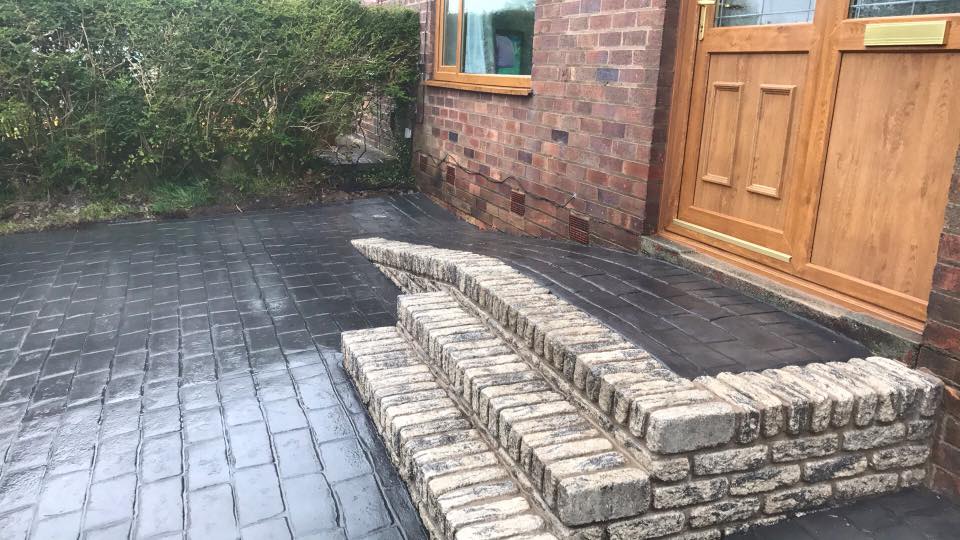
Creating Accessible Driveways: Pattern Concrete with Steps and Ramp for Pram Access
Local Context
This accessible driveway project was completed in Blackpool, demonstrating how pattern imprinted concrete can be used to create beautiful, inclusive outdoor spaces across the Fylde Coast. The combination of steps and ramp access is particularly valuable for families with young children, elderly residents, and anyone with mobility considerations—common needs in Lancashire communities.
The Importance of Accessible Driveway Design
Creating an accessible driveway is about more than just meeting building regulations—it's about designing outdoor spaces that work for everyone.
Whether you're a young family with prams and pushchairs, have elderly relatives who visit regularly, or simply want to future-proof your property, incorporating accessible features into your driveway design is a smart, considerate choice.
The driveway featured in this article demonstrates how pattern imprinted concrete can be used to create a beautiful, durable surface while integrating essential accessibility features.
The combination of a traditional step and a carefully designed ramp ensures the property is welcoming to all visitors and residents, regardless of their mobility needs.
Understanding Accessibility Requirements
When designing an accessible driveway in Lancashire and across the UK, several key principles and regulations guide the process:
Building Regulations and Standards
While private driveways aren't always subject to the same strict regulations as public access routes, following best practice guidelines ensures your driveway is safe, functional, and future-proof:
- Ramp Gradients: The maximum recommended gradient is 1:12 (8.33%) for independent wheelchair use, though 1:20 (5%) is ideal for maximum accessibility.
- Surface Texture: Non-slip surfaces are essential, particularly in wet conditions common to the Fylde Coast.
- Width Requirements: Ramps should be at least 1.2 meters wide for comfortable wheelchair and pram access.
- Handrails: While not always required for private driveways, handrails can provide additional safety for those who need them.
- Level Landing Areas: Flat areas at the top and bottom of ramps and steps provide safe transitional spaces.
Who Benefits from Accessible Design?
Accessible driveways benefit a wide range of people:
- Parents with Prams and Pushchairs: Easily navigate to and from your property without struggling with steps.
- Wheelchair Users: Independent access without assistance.
- Elderly Residents and Visitors: Safer, easier navigation reduces fall risks.
- Mobility Aid Users: Those with walking frames, crutches, or mobility scooters can access properties safely.
- Delivery Personnel: Easier access for deliveries, particularly large items.
- Cyclists: Convenient for wheeling bikes to storage areas.
- Suitcase Wheeling: Easier to move luggage when leaving for holidays.
Pattern Imprinted Concrete: The Ideal Solution
Pattern imprinted concrete (also known as stamped concrete or印刷混凝土) is particularly well-suited for accessible driveways for several reasons:
Smooth, Continuous Surface
Unlike block paving or natural stone, pattern concrete creates a continuous surface without individual units that can become uneven over time.
This is crucial for wheelchair wheels and pram wheels that need smooth travel.
Slip Resistance
The textured patterns provide excellent slip resistance while remaining smooth enough for easy wheeling.
This balance is perfect for Lancashire's often wet climate.
Durability
Pattern concrete is extremely durable and resistant to:
- Heavy loads without cracking or settling
- Weather extremes including freeze-thaw cycles
- Oil and chemical spills from vehicles
- UV fading when properly sealed
- Weed growth between sections
Design Flexibility
Pattern concrete is available in numerous designs and colors, allowing you to create attractive driveways that complement your property.
Popular patterns for accessible driveways include:
- Slate Pattern: Provides a contemporary look with natural stone appearance
- Ashlar Slate: Replicates cut stone for a more formal appearance
- Cobblestone: Traditional appearance with modern functionality
- Random Stone: Natural, irregular appearance that suits various property styles
Cost-Effectiveness
Pattern concrete typically costs less than natural stone while providing superior consistency and durability.
The long-term maintenance costs are also lower than many alternatives.
Designing the Step and Ramp System
The key to successful accessible driveway design is integrating steps and ramps in a way that feels natural and intentional rather than retrofitted.
Dual Access Approach
Providing both a step and a ramp offers maximum flexibility:
- Steps: Preferred by many able-bodied users as they can be quicker and take up less space
- Ramps: Essential for wheeled access and those with mobility limitations
- Side-by-Side Layout: Both options visible and easily accessible
Calculating Ramp Gradients
Proper gradient calculation is crucial for safety and usability.
Here's how to determine the right gradient:
Formula: Gradient = Rise ÷ Run × 100
For example, if you need to overcome a 600mm height difference:
- For 1:12 gradient (maximum): Run = 600mm × 12 = 7,200mm (7.2 meters)
- For 1:15 gradient (better): Run = 600mm × 15 = 9,000mm (9 meters)
- For 1:20 gradient (ideal): Run = 600mm × 20 = 12,000mm (12 meters)
In the project featured here, the ramp was designed with a gradient that balances space constraints with accessibility requirements, ensuring easy pram access while maintaining an aesthetic profile.
Step Design Considerations
When incorporating steps alongside a ramp:
- Riser Height: Typically 150-180mm for comfortable use
- Tread Depth: Minimum 300mm for safe foot placement
- Nosing: Slightly overhanging edge improves visibility and safety
- Contrast: Visual contrast helps those with vision impairments
- Consistency: All risers should be the same height
Landing Areas
Level landing areas are essential at both the top and bottom of ramps and steps:
- Minimum 1.5m × 1.5m provides adequate turning space
- Allows for safe door opening without being on a slope
- Provides rest points for those who need them
- Essential for safe pram maneuvering
The Installation Process
Creating an accessible pattern concrete driveway requires careful planning and expert execution:
Stage 1: Site Assessment and Planning
Professional assessment determines:
- Existing ground levels and required changes
- Drainage requirements and water runoff direction
- Underground utilities and their locations
- Property boundaries and any planning considerations
- Optimal placement of steps and ramp
Stage 2: Excavation and Ground Preparation
Proper groundwork is crucial for long-term durability:
- Excavation to appropriate depth based on expected loads
- Sub-base installation using MOT Type 1 aggregate
- Proper compaction to prevent settling
- Installation of drainage systems where needed
- Preparation of formwork for steps and ramp
Stage 3: Concrete Laying
The concrete installation requires precision:
- Appropriate concrete mix for strength and durability
- Proper thickness (typically 100-150mm for driveways)
- Steel reinforcement mesh for additional strength
- Careful gradient creation for drainage and ramp slope
- Smooth finishing in preparation for patterning
Stage 4: Pattern Application
This stage creates the decorative finish:
- Color hardener application for durable color
- Release agent to prevent pattern mats sticking
- Pattern pressing using specialized mats
- Careful attention to pattern alignment and consistency
- Edge detailing for professional finish
Stage 5: Curing and Sealing
Final stages ensure longevity:
- Adequate curing time (typically 7 days minimum)
- Surface cleaning and preparation
- Application of high-quality sealant
- Protection from traffic during curing
Design Considerations for Blackpool and Fylde Coast
Homes in Blackpool, Lytham, Poulton, and across the Fylde Coast face specific challenges that influence accessible driveway design:
Coastal Weather Conditions
- Salt Air: Pattern concrete is highly resistant to salt damage, making it ideal for coastal properties
- Wind-Driven Rain: Proper drainage and sealed surfaces prevent water damage
- Freeze-Thaw Cycles: Quality concrete mix and proper installation prevent cracking
Victorian and Edwardian Properties
Many Fylde Coast properties feature period architecture.
Pattern concrete can be selected in styles that complement these buildings while providing modern accessibility:
- Slate patterns suit Victorian properties
- Ashlar designs complement Georgian and Edwardian homes
- Traditional colors match existing stonework
Terraced Housing
Common in Blackpool and surrounding areas, terraced properties often have limited front space.
Compact accessible designs maximize functionality in smaller areas.
Maintenance and Long-Term Care
Pattern concrete driveways require minimal maintenance, but regular care ensures they remain safe and attractive:
Regular Maintenance
- Cleaning: Pressure wash annually to remove dirt and prevent algae growth
- Re-sealing: Apply fresh sealant every 2-3 years to maintain weather resistance
- Inspection: Regular checks for any cracks or damage allow for prompt repairs
- Weed Control: Remove any vegetation from edges promptly
- Winter Care: Use calcium-based ice melters rather than salt on the surface
Slip Resistance
Maintaining slip resistance is particularly important for accessible features:
- Keep ramps and steps clear of leaves and debris
- Ensure drainage prevents water pooling on access routes
- Consider anti-slip additive in sealant for enhanced grip
- Regular cleaning prevents algae growth that can make surfaces slippery
Cost Considerations
While accessible driveway design may initially seem like an added expense, it offers significant value:
Initial Investment
Pattern concrete driveways with integrated accessible features typically cost:
- Base cost competitive with block paving
- Additional costs for ramp and step construction
- Potential savings from single-surface installation
- Long-term value from durability and low maintenance
Return on Investment
- Property Value: Accessible features appeal to broader market
- Future-Proofing: Avoids costly retrofitting later
- Insurance: Reduced liability risks from falls
- Quality of Life: Daily convenience for residents and visitors
Legal and Planning Considerations
Before starting your accessible driveway project in Lancashire:
Planning Permission
- Generally not required for driveway replacement
- May be needed for new driveways or significant changes
- Listed buildings or conservation areas have additional requirements
- Always check with local planning authority
Drainage Regulations
Since 2008, new driveways must either:
- Use permeable materials, or
- Direct water runoff to a sustainable drainage system
Pattern concrete requires proper drainage planning to comply with regulations.
Shared Access and Rights of Way
If your driveway provides access for neighbors, consult with them about accessibility improvements that benefit everyone.
Common Mistakes to Avoid
When creating accessible driveways, avoid these common errors:
- Excessive Ramp Gradient: Too steep makes the ramp difficult or unsafe to use
- Insufficient Landing Space: Cramped areas at top/bottom create safety hazards
- Poor Drainage: Water pooling on ramps creates slipping hazards
- Inconsistent Steps: Variable riser heights cause trips and falls
- Sharp Edges: Create hazards and look unfinished
- Inadequate Surface Texture: Smooth surfaces become dangerously slippery when wet
- Poor Color Choices: Light colors show dirt quickly; consider practical options
Working with Professional Installers
Creating accessible pattern concrete driveways requires specialized expertise:
What to Look for in a Contractor
- Experience with Accessible Design: Understanding of regulations and best practices
- Portfolio of Similar Projects: Proof of capability and quality
- Knowledge of Building Standards: Familiarity with accessibility guidelines
- Insurance and Guarantees: Protection for your investment
- Local Experience: Understanding of regional conditions and requirements
The Consultation Process
A thorough consultation should include:
- Site assessment and measurements
- Discussion of accessibility requirements
- Design options and pattern selection
- Gradient calculations and compliance verification
- Drainage planning
- Timeline and scheduling
- Detailed written quotation
Alternative Accessible Features
Depending on your specific needs and site constraints, consider these additional features:
Handrails
While not always necessary, handrails provide additional support and can be particularly helpful for elderly users or those with balance issues.
Lighting
Integrated lighting along ramps and steps improves safety during dark hours:
- Low-level LED lights along ramp edges
- Step edge lighting for visibility
- Motion-activated systems for convenience
Tactile Warnings
For users with vision impairments, textured surfaces at the top of steps provide advance warning.
Real-Life Impact: Why Accessibility Matters
The real value of accessible driveway design becomes clear in daily use:
- Parents: No more awkwardly lifting prams up steps while juggling shopping
- Grandparents: Confident, independent visits without mobility concerns
- Future Needs: Peace of mind that your home works for changing circumstances
- Visitors: Welcoming environment for everyone who comes to your home
- Property Value: Appeal to broader range of potential buyers
Case Study: The Featured Project
The Blackpool driveway project shown here demonstrates best practices in accessible design:
- Pattern Choice: Slate design provides attractive appearance with slip resistance
- Dual Access: Both step and ramp provide choice based on user needs
- Gradient: Carefully calculated for easy pram access
- Integration: Access features blend seamlessly with overall design
- Edging: Clean edges define spaces and prevent deterioration
- Drainage: Properly designed to prevent water accumulation
Conclusion: Designing for Everyone
Creating an accessible driveway with pattern imprinted concrete is an investment in your property's functionality, value, and inclusivity.
By incorporating features like integrated steps and pram-accessible ramps, you create outdoor spaces that work for everyone—from young families with pushchairs to elderly relatives with mobility aids.
Pattern concrete offers the perfect combination of durability, aesthetics, and smooth surface characteristics needed for accessible design.
When properly installed by experienced professionals, these driveways provide decades of reliable, low-maintenance service while enhancing your property's curb appeal.
Whether you're building a new driveway or upgrading an existing one in Blackpool, Lytham, Poulton, or across the Fylde Coast, incorporating accessible design features is a forward-thinking choice that benefits everyone who uses your property.
Ready to create an accessible, beautiful driveway for your property?
Contact our experienced team to discuss how we can design a pattern concrete driveway that combines style, durability, and accessibility perfectly suited to your needs and your property.